L-Arginine and Nitric Oxide: The Mechanism Is Real, the Scale Is Not
The short version
Nitric oxide synthase converts L-arginine into nitric oxide, which relaxes vascular smooth muscle and widens blood vessels. That is the same final pathway prescription PDE5 inhibitors act on from the other end, and it is why L-arginine appears in almost every male-performance formula. The oral research works in grams per day. Stallion Power's entire blend is 82 mg across nine ingredients, and because L-arginine is listed below the one member the label does quantify, it can be no more than 5 mg.
- The pathway is real: arginine to nitric oxide to vascular smooth muscle relaxation is textbook physiology, not marketing.
- Oral delivery is the weak link: swallowed arginine is heavily metabolised on first pass, which is why research has increasingly moved to L-citrulline.
- The arithmetic: descending-order labelling puts L-arginine below the printed 5 mg of caffeine, so 5 mg is its ceiling — against a literature measured in grams.
- None of that needed a disclosure: a blend total plus one broken-out member is enough to cap every ingredient underneath it.
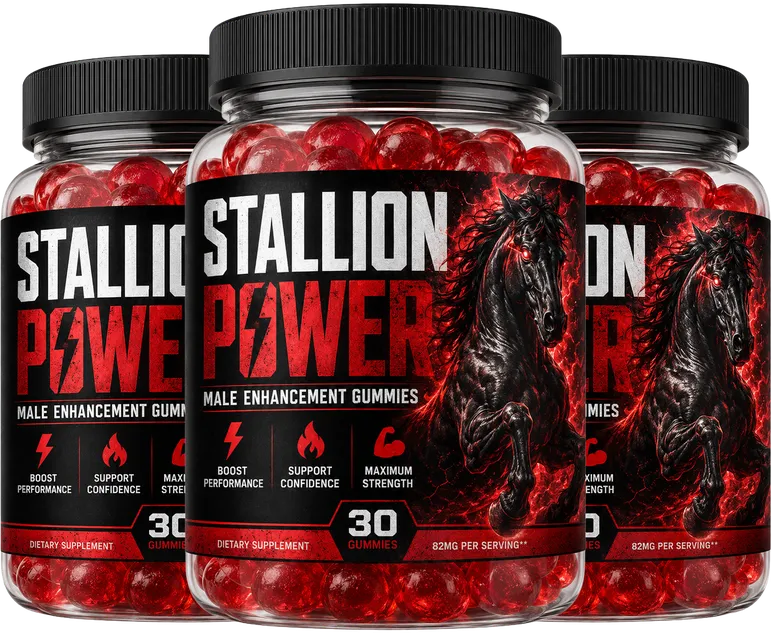
The pathway, in four steps
This is the part the marketing gets right, so it is worth setting out properly.
- An enzyme called nitric oxide synthase takes L-arginine as its substrate and produces nitric oxide.
- Nitric oxide is a gas small enough to diffuse straight out of the cell that made it and into the smooth muscle wrapped around a blood vessel.
- Inside that muscle cell it activates guanylate cyclase, which raises cyclic GMP.
- Raised cyclic GMP relaxes the muscle. The vessel widens and more blood flows through it.
That is the same pathway prescription erectile-dysfunction drugs act on, approaching it from the opposite end: rather than supplying more substrate at the start, they block the enzyme that breaks cyclic GMP down at the finish. The reason this matters for a supplement label is that the pathway's reality is never in dispute. What is in dispute is whether a swallowed ingredient moves it.
Stallion Power's own sales page makes exactly this argument, describing L-arginine as “an amino acid the body uses to produce nitric oxide, commonly included to support healthy circulation”. That sentence is accurate. Everything below is about the word it leaves out.
Why swallowing arginine is inefficient
Arginine taken by mouth has to survive two rounds of metabolism before it reaches the circulation. The enzyme arginase, present in the gut wall and abundant in the liver, converts a substantial fraction of it to ornithine and urea on first pass. The result is that a large oral dose produces a much smaller rise in plasma arginine than the arithmetic would suggest, and tolerance is limited at the top end by gastrointestinal side effects.
This is exactly why the field has drifted towards L-citrulline. Citrulline bypasses intestinal and hepatic arginase, is converted to arginine in the kidney, and raises plasma arginine more reliably per gram swallowed. When a formula lists arginine rather than citrulline, it is using the older and less efficient of the two options — which makes the amount matter more, not less.
What a proprietary blend has to tell you
Before the arithmetic, the rule it rests on. United States labelling rules let a manufacturer group several dietary ingredients under a proprietary blend. When it does, it must declare the total weight of the blend and list the ingredients inside it in descending order of predominance by weight. It does not have to publish an amount for any individual ingredient.
That is not a loophole. It is the written rule, applied here exactly as intended. Stallion Power's panel declares Proprietary Blend 82 mg and lists nine ingredients beneath it — muira puama extract, maca extract, catuaba extract, green tea extract, caffeine, ashwagandha, L-arginine, Tribulus terrestris, horny goat weed extract. One of the nine carries a printed amount. Eight do not.
Two consequences follow, and together they are enough for everything that comes next:
- Rank, not magnitude. Muira puama outweighs maca, which outweighs catuaba, down to horny goat weed extract at the bottom. The order tells you nothing about whether the first is 40 mg and the rest are dust.
- A ceiling that transfers downwards. In a descending-order list, nothing below a quantified member can weigh more than that member. The manufacturer quantified caffeine. That single decision put a hard cap on every ingredient underneath it.
The arithmetic on this label
The research on oral arginine, including the summaries NIH's Office of Dietary Supplements maintains for performance-related uses, works in grams per day. Not milligrams — grams, generally several of them, and often split across doses because of the tolerance problem above.
Stallion Power's entire proprietary blend is 82 mg per gummy. That is 0.082 g, and it is the total for nine ingredients, not the arginine figure. Even in the physically impossible case where arginine made up the whole blend, one gummy would deliver under a tenth of a gram — already one to two orders of magnitude below the amounts the literature uses.
The real ceiling is far lower, and the label hands it to you. L-arginine is the seventh of the nine. Caffeine is the fifth, and carries a printed 5 mg. Anything below caffeine in a descending-order list weighs no more than caffeine does. So on this label L-arginine is at most 5 mg — and so are Tribulus terrestris and horny goat weed extract beneath it. That is not an estimate and not our guess. It is what the ordering rule means, applied to the one amount the manufacturer chose to print.
Five milligrams against a literature measured in grams is a gap of two to three orders of magnitude. Reaching it required no undisclosed number at all — which is the quietly useful thing about a declared blend total plus one broken-out member: between them, they bound everything else on the list.
The 567 mg footnote does not close the gap
The panel carries a double-asterisk footnote reading equivalent to approximately 567mg of dry powders. It is worth being precise about what that sentence is, because at a glance it looks like a bigger number arriving to rescue the small one.
It is an extract-ratio claim. Concentrated extracts are produced by processing a larger quantity of raw plant material, so a smaller weight of extract is presented as corresponding to a larger weight of unprocessed powder — here, a claimed ratio of roughly seven to one. Three things follow. You still swallow 82 mg, not 567 mg. The word approximately is the manufacturer's, not ours. And nothing on the label states an extraction ratio for any individual ingredient, a solvent or method, or a standardised marker compound — which makes the claim unverifiable in principle rather than merely unverified.
It also does not apply to L-arginine in any meaningful way. Arginine is a single amino acid, not a botanical extract; there is no raw-powder equivalence to invoke for it. Whatever the footnote is doing for the plant material in the blend, the amino acid's ceiling stays where the ordering rule put it.
What this does and does not prove
It does not prove the product does nothing. Eight of the nine amounts are genuinely unknown to us, several of the botanicals have traditional-use histories rather than dose-response curves, and a supplement is a combination rather than a single agent.
What it does establish is narrower and firmer: if the reason you are buying this is the nitric-oxide story the vendor tells about L-arginine, the label's own numbers rule out that story operating at the scale the research describes. That is a conclusion you can reach from printed figures, without trusting anybody's opinion, and it is the sort of check worth running before a six-bottle order.
Three questions worth emailing before you order
- How many milligrams of L-arginine are in one gummy?
- Is any ingredient in the blend standardised, and to what marker compound and percentage?
- What extraction ratio does the 567 mg equivalence figure refer to, and to which ingredients?
A seller that knows its own formula can answer the first in a line. The answers you get — including no answer at all — tell you a great deal, and they cost nothing to ask for before committing to 180 days of anything.
One safety point that is not about dose
Anything sold on a blood-flow mechanism deserves a conversation with a doctor if you take nitrates or blood-pressure medication. Separately, the FDA maintains a standing public list of sexual-enhancement products found to contain undeclared prescription drug ingredients, most often PDE5 inhibitors, which are dangerous precisely because of that nitrate interaction. We have no evidence of anything of the kind here and are not suggesting it — but it is the reason this category warrants more caution than most, and the reason a published, checkable formula is worth more here than anywhere else on the supplement shelf.
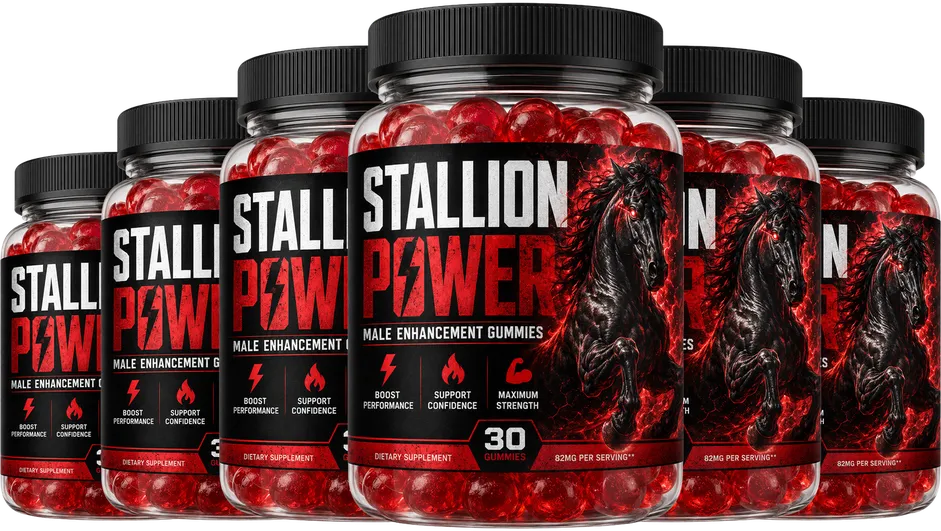
Where L-arginine sits in this formula
Seventh of nine on a descending-order panel, below the 5 mg caffeine line, inside a blend the manufacturer totals at 82 mg. Our main page marks the amount undisclosed rather than guessing at it.
Order NowFrequently asked questions
Does L-arginine actually widen blood vessels?
In the body, yes, by way of nitric oxide. Nitric oxide synthase uses arginine as its substrate; the nitric oxide produced diffuses into vascular smooth muscle, raises cyclic GMP and the muscle relaxes. The question is never whether the pathway exists, only whether a swallowed amount meaningfully moves it.
Why do studies use L-citrulline instead?
Because oral arginine is largely broken down by arginase in the gut wall and liver before it reaches the circulation. Citrulline escapes that first pass and is converted to arginine in the kidney, so it raises plasma arginine more efficiently than arginine itself does.
How can you know L-arginine is under 5 mg if it is not disclosed?
From the ordering rule. A proprietary blend must list its ingredients in descending order of weight. Caffeine is the fifth of the nine and carries a printed 5 mg. L-arginine is the seventh, below it, so it cannot weigh more than caffeine does. That is the rule applied to the one amount the manufacturer printed, not an estimate.
Could 82 mg still do something?
Not through this pathway at any scale the research would recognise, and 82 mg is the total for all nine ingredients rather than the arginine amount. The honest position is that the ingredient is present, the amount is undisclosed, and the ceiling the label itself sets sits far below the studied range.
References
- NIH Office of Dietary Supplements — Dietary Supplements for Exercise and Athletic Performance (Health Professional Fact Sheet)
- PubChem — L-Arginine compound summary, National Library of Medicine
- eCFR — 21 CFR 101.36, Nutrition labeling of dietary supplements
- FDA — Dietary Supplement Labeling Guide, Chapter IV: Nutrition Labeling
- MedlinePlus — Erectile Dysfunction, National Library of Medicine
- FDA — Tainted Sexual Enhancement Products